

An air conditioner makes water every hour it runs. A coil pulls moisture out of the air, and that water is meant to drain away through a line and a pan. When the line clogs, the pan rusts through or the coil freezes and thaws, the water goes into the house instead.
If a ceiling is dripping or an air handler closet is wet, call (817) 623-9267. Switch the system off first, because a running unit keeps making water.
Why Coppell air conditioners make so much water
The National Weather Service in Fort Worth describes North Texas summers with Gulf moisture that keeps humidity stifling and overnight lows that sometimes stay at or above 80 degrees. It adds that daytime highs in July and August are consistently in the 90s and often reach 100 or more.
Its 1991 to 2020 normals for DFW Airport put the normal high near 95.6 degrees in July and 95.8 in August. A system working against that heat and humidity runs for long stretches, so it removes a lot of water from the air and has a lot of water to drain.
Many North Texas homes place the air handler in the attic or in a closet over living space. A leak there does not drip onto a floor. It collects in the pan, overflows into insulation and then stains the ceiling below, often weeks after the line first clogged.
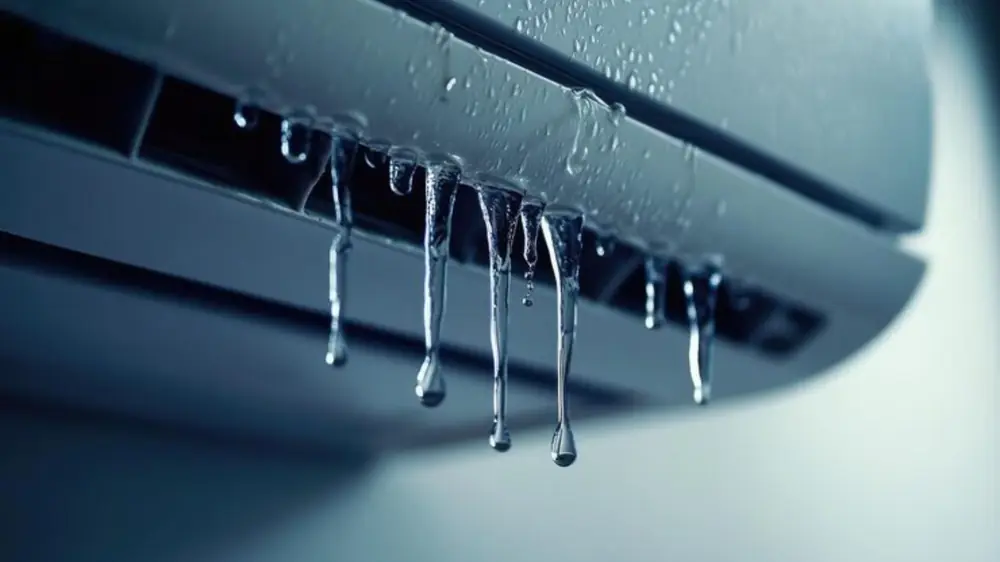
What an AC leak looks like in the house
| What you see | What it usually means | Where to look |
|---|---|---|
| Brown ring or stain on a hallway or bedroom ceiling | Overflow from a pan or line in the attic is soaking the drywall | The attic floor beneath the air handler |
| Wet floor in a utility closet | The drain line is clogged or the pan has failed | The closet floor and the baseboard beside it |
| Ice on the indoor coil or on the line | Airflow or refrigerant problems are freezing the coil, then it melts | The air handler cabinet |
| Musty smell near a vent | Damp insulation or duct wrap holds moisture | The duct runs above the stain |
| Water dripping from a ceiling vent | Condensation or overflow is running along the duct | The vent boot and ceiling around it |
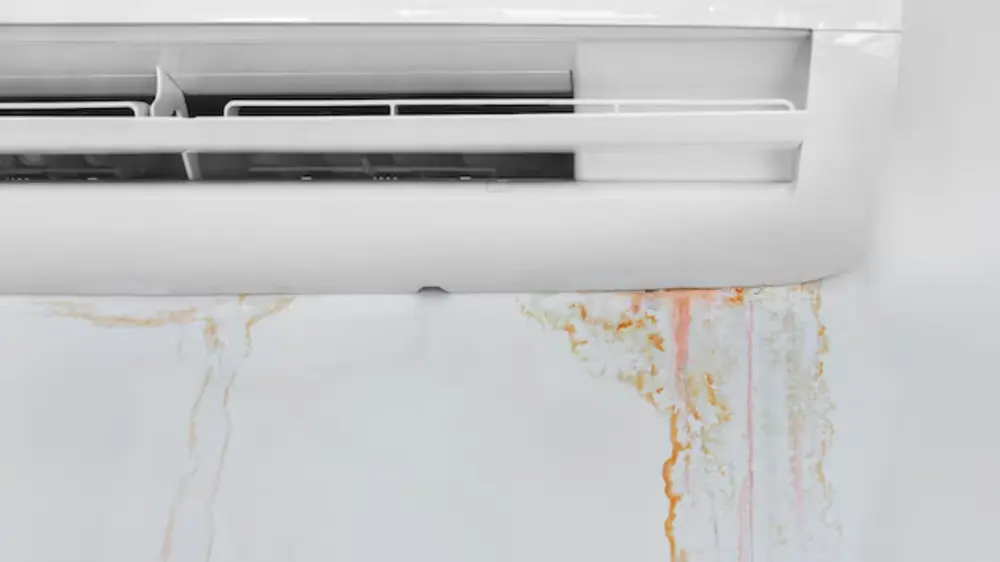
Safety first: what to do in the first hour
Turn the thermostat to off so the unit stops making water. Then switch off the system's breaker if the panel is dry and easy to reach. Do not climb into a hot attic to look around. Attic heat in summer is a real hazard, and wet insulation hides loose boards.
Dripping near light fixtures
If water is coming through a light fixture or a ceiling fan, leave the light off and stay out from under it. Turn off that circuit at the panel only if you can reach it safely, and call an electrician if the fixture buzzes or smells hot.
Place a bucket under the drip, poke a small relief hole in a sagging ceiling bubble only if it is bulging with water, and move furniture out of the way. Take photos of the stain and the unit. Then call your HVAC company to fix the unit, and call us to dry the house.
Ceiling stain under the attic unit?
Tell the dispatcher what you see. We will explain what needs drying and what the HVAC technician needs to fix.
How we dry the ceiling, insulation and walls
The crew starts with a moisture meter and a thermal imaging camera to trace how far the water traveled. In an attic this means checking the insulation, the framing and the ceiling from above and below. Wet insulation is removed because it holds water and loses its value.
Damaged ceiling drywall may be cut back to a dry edge, with the opening kept small. Air movers and LGR dehumidifiers then dry the framing and the air in the room, and a HEPA air scrubber can clean the air when dust is stirred up. Readings are taken until the materials reach the dry goal.
Industry practice for this work follows the ANSI/IICRC S500 standard. After the structure is dry, the opening can be patched, textured and painted under water damage repair. For the full drying method, see structural drying and dehumidification.
What changes the scope and cost of an AC leak job
| Factor | Why it matters |
|---|---|
| How long the line leaked | Weeks of seepage soak insulation and framing, while a fresh overflow may only wet a ceiling |
| Insulation type | Blown insulation holds water and is usually removed, while batts may be dried in some cases |
| Ceiling finish | A textured ceiling is harder to patch than a flat one |
| Access | A tight attic or a high ceiling adds time |
| Room count | Water that followed a duct can reach more than one room |
The scope and price are explained before work starts. Call (817) 623-9267 and describe the stain, and the dispatcher can tell you what usually follows. A replacement unit or a new line is a job for an HVAC contractor, not restoration.
Insurance and AC leak claims
The Texas Department of Insurance separates a sudden loss from a gradual one, and condensate damage can fall on either side. A clogged drain line that overflowed once may read very differently from a pan that has dripped for months.
The TDI also says to stop the leak and dry the area as soon as you can, because mold can start growing within a day. Keep your HVAC invoice, take photos before repairs and tell your insurer about hidden damage soon after you find it.
Preventing the next condensate overflow
- Have the unit serviced before cooling season, with the drain line flushed.
- Ask your HVAC company about a float switch that shuts the system off when the pan fills.
- Ask about a secondary drain pan under any attic air handler.
- Change the filter on schedule, because a dirty filter can freeze the coil.
- Look at the ceiling below the attic unit every season for a faint ring.
- Do not ignore a unit that runs without cooling, because a frozen coil melts into the house.
City permit rules can apply when a system is replaced. The City of Coppell lists mechanical work among the permits to ask the Building Inspections division about, so your HVAC contractor should handle that part.
We cover AC leaks in the surrounding cities with the same dispatch line, including water damage restoration in Carrollton and water damage restoration in Lewisville.
Frequently asked questions
Is emergency AC leak water damage repair available in Coppell?
Yes, and a dripping air handler does not wait for business hours. Someone answers the dispatch line day and night. Turn the system off, call, and describe the stain or the wet closet. The dispatcher will explain what to do until a crew arrives.
Who fixes the air conditioner and who dries the ceiling?
Your HVAC contractor repairs the unit and clears the line. We dry the wet ceiling, insulation and walls and explain what has to be rebuilt. Both are needed, and the unit should be fixed first or the ceiling will stain again.
Why did the stain appear weeks after the leak started?
Water collects in the pan and insulation before it soaks through the ceiling drywall. The stain is the end of the path, not the start, so the wet area is usually larger than the stain.
Can I leave the stain to dry on its own?
Not safely. The drywall may look dry while the insulation above it stays wet. A meter reading tells you whether the area is dry, and mold can start in a day or two on damp material.
Will insurance cover an AC leak?
It depends on the cause and the timing. Sudden overflow is treated differently from long-term seepage. Read your policy and talk to your agent, and keep your photos and your HVAC invoice.