
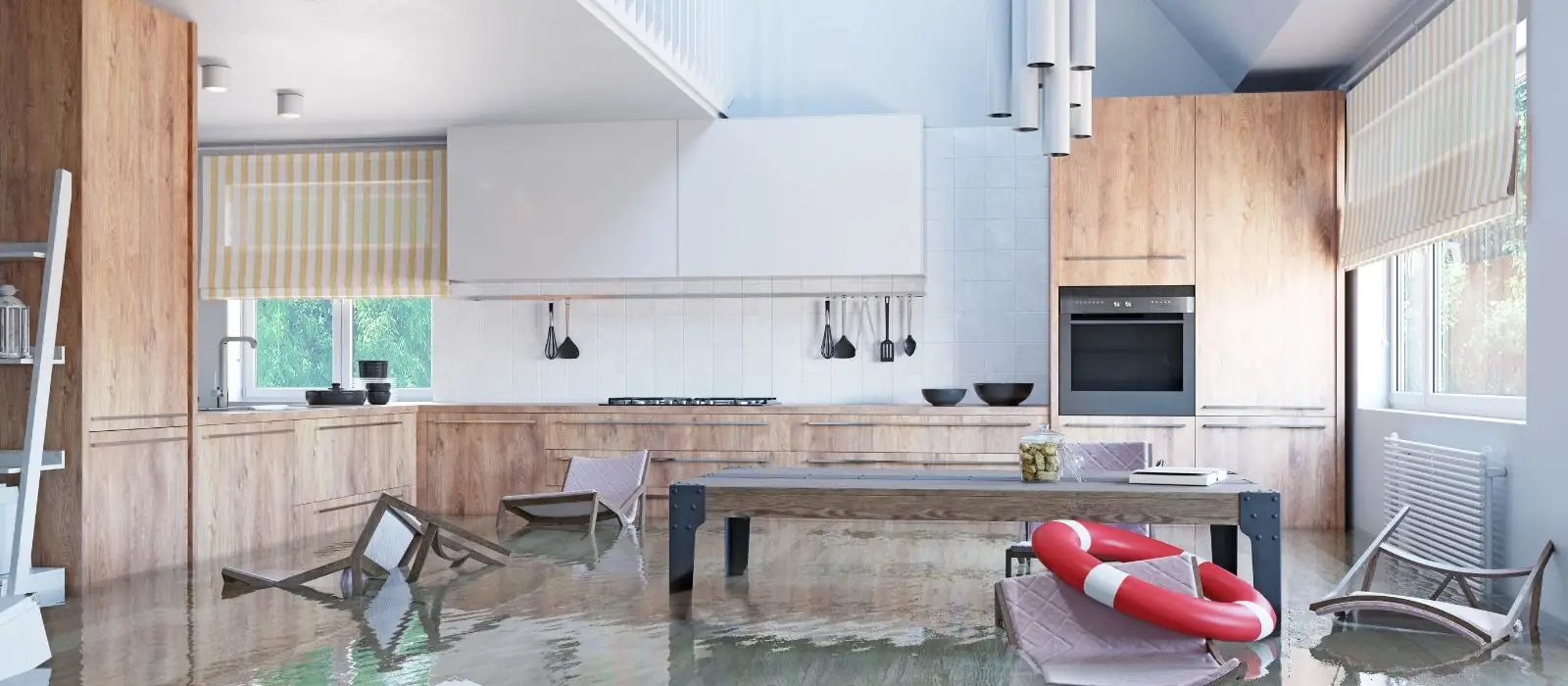
A kitchen holds more water sources than any other room. The sink, the dishwasher, the refrigerator line and the pipes in the wall all end up behind cabinets, so leaks hide for a long time. When water does show up, it is usually on a floor that sits on top of everything else.
If water is spreading now, call (817) 623-9267. The dispatcher will tell you what to shut off while a crew is on the way.
Why a kitchen loss is handled as a room
Water in a kitchen does not stay where it started. It runs under the cabinet bases, soaks the toe kicks and wicks up the back of the cabinet boxes. It also moves under the flooring and into the wall behind the range or the sink.
That is why we treat the kitchen as a single drying zone. The goal is to find all of the water, decide what comes out and in what order, and dry what stays. Pulling one wet cabinet and leaving the floor under it damp only moves the problem.
Census Bureau QuickFacts counts about 15,500 households in Coppell for 2020 to 2024. Every one of those kitchens has the same weak point: cabinet boxes and toe kicks made of particleboard swell quickly when wet, and they sit at floor level where leaks end up.
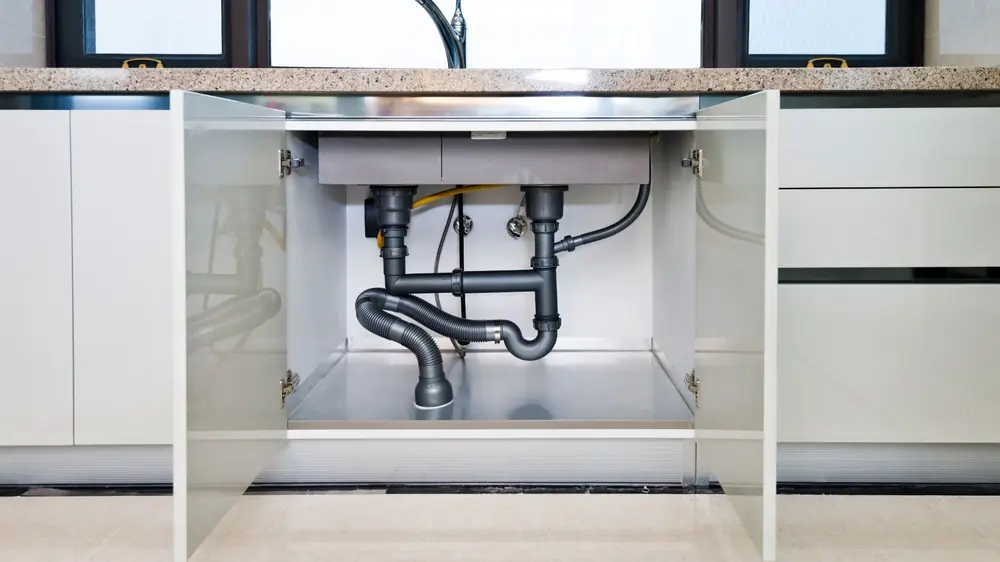
What you see and what it means
| What you see | What it usually means | What is at risk |
|---|---|---|
| Swollen or crumbling cabinet bottom or toe kick | Water has been sitting at the base for some time | Cabinet boxes and the floor beneath them |
| Tile that sounds hollow, or grout that is dark and wet | Water is under the tile and in the setting bed | Subfloor, backer board and nearby walls |
| Lifting laminate or vinyl plank near the dishwasher | A slow leak is moving under the planks | The floor system and cabinet bases |
| Stained wall behind the range or sink | A line or valve in the wall is seeping | Drywall, insulation and framing |
| Musty smell inside the sink cabinet | Damp material has held moisture for days | Cabinet floor, drain connections and walls |
Safety steps for the first hour
Shut off the water at the valve under the sink or at the appliance. If you cannot find it, close the main water valve for the house. Then stop using the dishwasher and the disposal, and keep everyone out of standing water.
A kitchen is full of outlets and appliances. Do not touch any appliance, power strip or outlet that is wet or sitting in water.
Stove, outlets and gas
If you smell gas, leave the house and call 911 or the gas utility from outside. If water is near an outlet or the panel, stay clear and shut off power only from a dry spot. Never plug in or unplug a wet appliance.
Pull small items off the floor, empty the lower cabinets so the bases can be checked, and take photos before you move anything. Then call us so the cabinets, floor and wall cavities are mapped with a meter.
Water in the kitchen?
Tell the dispatcher where it started and what is wet. We will plan the drying by room.
Our process from the cabinet base to the subfloor
The crew starts with moisture readings across the floor, the cabinet bases and the lower walls, plus a thermal imaging camera to show water that cannot be seen. Standing water is extracted first, then the work moves in order: toe kicks and trim, cabinet bases, flooring and then wall cavities if they are wet.
Particleboard cabinet bottoms and wet toe kicks are usually removed. Solid wood and plywood boxes can often dry in place. Tile may stay if the setting bed dries, but the crew checks under it with a meter before deciding.
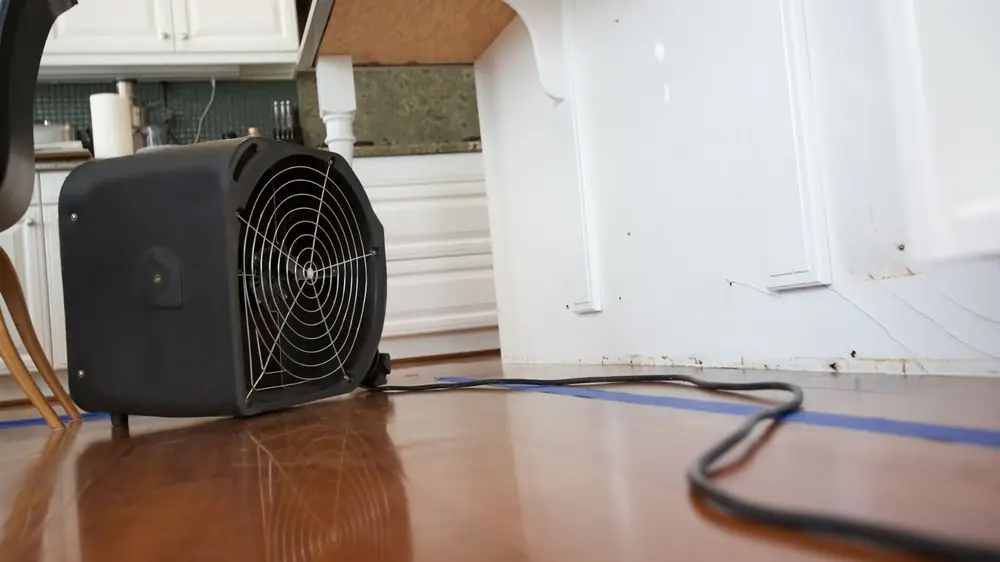
Air movers push dry air across surfaces, and LGR dehumidifiers pull moisture from the room. Where flooring is sealed over a wet subfloor, small drying ports or lifted planks let the air get in. The reference standard for this work is ANSI/IICRC S500, and readings are logged until the materials reach the dry goal.
Stone countertops are not harmed by water, but the cabinets under them are. If the base cabinets must come out, the countertop is usually lifted and set aside, which is a rebuild step covered under water damage repair.
What sets the scope and cost of a kitchen job
| Factor | Why it matters |
|---|---|
| Cabinet material | Particleboard usually comes out, while plywood and solid wood may dry |
| Flooring type | Tile, vinyl plank, laminate and hardwood dry at very different rates |
| How long it sat | Days of seepage reach the subfloor and the wall, while a fresh leak may not |
| Wall involvement | Water behind the range or sink adds removal and drying steps |
| Countertop and island | Heavy stone must be lifted and reset when bases are removed |
Scope and price are explained before work starts, and we do not quote without knowing what is wet. A kitchen with a failed appliance hose can be a very different job from one with a pipe leaking in the wall. Call (817) 623-9267 and describe the room.
Permits, contractors and who does the rebuild
The City of Coppell says its Building Inspections division requires permits for all commercial or residential construction, and it lists a residential remodel permit among its residential permit types. It also says contractors performing work must be registered with the City.
Drying and demolition are different from rebuilding. If cabinets, plumbing or electrical work have to be replaced, ask the contractor who will do that work whether a permit applies and who pulls it. Coppell has adopted the 2024 International Plumbing Code with local amendments, so plumbing changes follow that edition.
Insurance and kitchen claims
The Texas Department of Insurance explains that a kitchen leak from a supply line or dishwasher is usually judged by one question, whether it was sudden. Slow seepage under a sink is treated differently, and so is the mold that follows it.
A kitchen claim often turns on how long water sat under the cabinets. Photograph the damage before repairs, keep the failed part and keep receipts for temporary repairs. Your policy and your adjuster decide coverage.
Mistakes to avoid after a kitchen leak
- Do not replace the floor before the cabinet bases and subfloor are dry.
- Do not run a fan over wet cabinets and call it done, because the sealed spaces stay wet.
- Do not caulk the base of a wet cabinet, since that traps moisture.
- Do not wait for the stain to grow, because water behind the wall is not visible.
- Do not remove a cabinet before taking photos for your insurer.
If the leak began at a machine, our page on appliance leak water damage covers hoses and valves in more detail. If the source was a pipe, see burst pipe water damage.
Neighboring cities use the same dispatch line, including water damage restoration in Grapevine and water damage restoration in Carrollton.
Frequently asked questions
Is emergency kitchen water damage restoration available in Coppell?
Yes. Kitchen leaks happen at dinner time and at midnight, and the line is open for both. Call, describe where the water started and what is wet, and you will be told what to do until a crew is arranged.
Do the cabinets have to come out?
Not always. Wet particleboard bases and toe kicks usually come out, while plywood and solid wood boxes may dry in place. The decision follows meter readings, not a rule.
Can tile stay in place after a leak?
Often yes, if the setting bed and subfloor dry. The crew checks under the tile with a meter, and if moisture is trapped, small sections may be lifted to let air in.
How long does a kitchen take to dry?
It depends on the materials and how wet they are. Drying runs for days, with readings each day, and the equipment stays until the materials reach the dry goal.
Does restoration include new cabinets and flooring?
Restoration dries the room and removes what cannot be saved. Rebuilding cabinets, countertops and flooring is covered under water damage repair, and we explain what is left once the room is dry.