
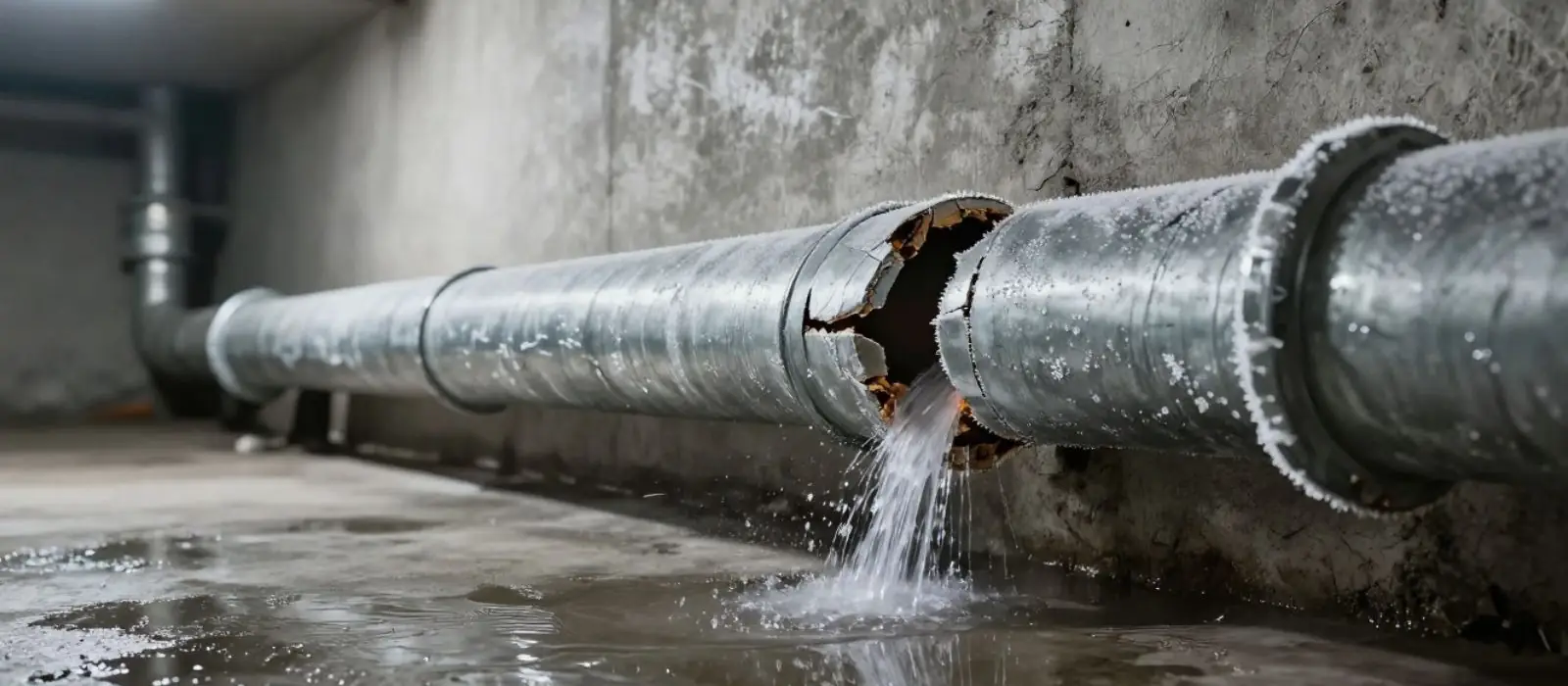
Ice can crack a pipe while it is still solid, but the water only starts flowing when the temperature rises and the plug melts. That is why many freeze losses show up on the first warm afternoon, when a ceiling stain appears or a faucet that was dry starts to run. Call (817) 623-9267 if you see either one.
This page covers damage from a freeze and thaw. If a supply line failed for another reason, see burst pipe water damage cleanup. The first few hours of any water loss follow the steps on the water mitigation page.
What a North Texas freeze does to household plumbing
Hard freezes are uncommon here, so plumbing in attics, garages and exterior walls is often lightly protected. The National Weather Service in Fort Worth lists a low of minus 2 degrees Fahrenheit at DFW on February 16, 2021, and notes that the airport's high on February 15 was lower than the record low for that date. Its event summary also lists 139 hours of freezing temperatures at DFW from the evening of February 13 to noon on February 19.
Coppell saw the results. In its February 18, 2021 update the City of Coppell reported that frozen pipes were beginning to burst and that it had received an influx of calls. The same city updates said it was acceptable to let faucets drip to prevent freezing, and that exposed outdoor pipes should be wrapped and drained.
Where pipes freeze first in a house
- Supply lines in exterior walls, especially on the north side.
- Lines in the attic, where insulation sits on the ceiling below and leaves the pipe in the cold.
- Garage plumbing, including a washer supply and a water heater inlet.
- Outdoor hose bibs and irrigation backflow assemblies.
- Lines in an unheated closet or a cabinet against an outside wall.
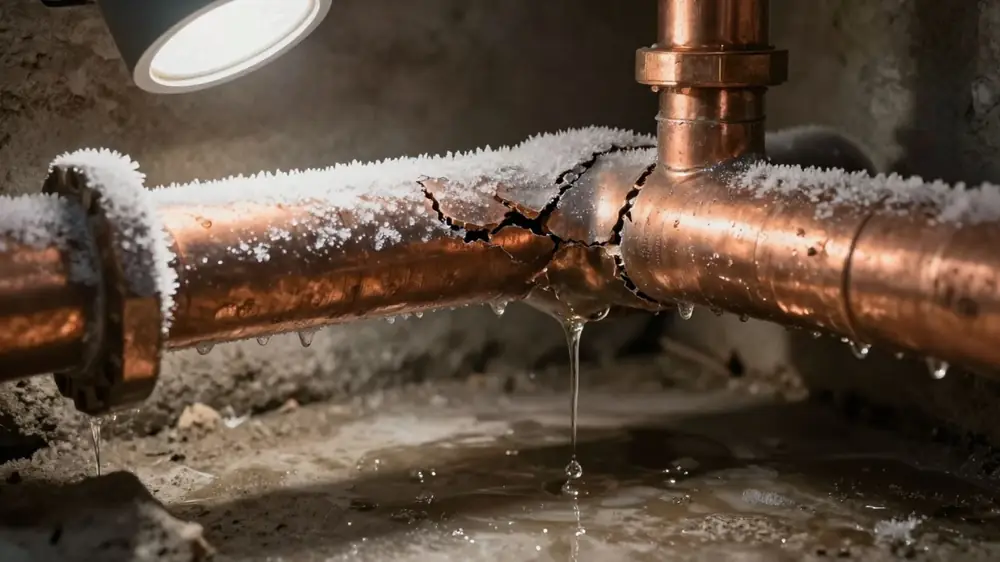
What you see and what it means
| What you see | What it usually means | What to do |
|---|---|---|
| Frost or ice on an exposed pipe | The pipe is frozen and may already be cracked | Open the nearest faucet and call a plumber |
| One faucet gives no water or only a trickle | A section of that line is blocked by ice | Leave the faucet open and check nearby walls |
| Water appears on a ceiling or wall as it warms up | A cracked pipe is now carrying water again | Close the main valve at once |
| Sound of running water when all taps are closed | A split line is flowing after the thaw | Close the main valve and call dispatch |
| A ceiling that sags after a cold night | Insulation and ceiling board are holding thawed water | Stay out from under it and call dispatch |
Safety steps while pipes are frozen and as they thaw
If a pipe is frozen but has not split, open the nearest faucet so melting ice and pressure have somewhere to go. Never use a torch or open flame on a pipe. Warm air from a hair dryer, used on a dry floor with the faucet open, is the usual safe method, and a plumber can do it faster.
If you find a split pipe, close the main water valve before the ice melts. Once the line thaws it will flow at full pressure, and a closed valve is what keeps a small crack from becoming a flooded room.
Power, ice and water do not mix
If thawed water is reaching a ceiling light, an outlet or the electrical panel, stay out of the room. Cut power at the breaker only if you can do it on dry floor. During a grid emergency, call 911 for any risk of shock or fire.
Pipe cracked or ceiling stained after a freeze?
Call the dispatch line, describe where the water is and tell the dispatcher whether you have power.
Why the damage appears after the thaw
| Stage | What is happening | What you can do |
|---|---|---|
| While the pipe is frozen | Ice blocks the line and can crack the wall of the pipe | Open faucets and close the main if you see a split |
| As the temperature climbs | Ice melts and water starts to move through the crack | Check ceilings, attic floors and low walls every hour |
| After pressure returns | The crack delivers full line pressure into the structure | Keep the main closed until a plumber repairs the line |
Attic breaks are the hardest to catch. Water falls into insulation, spreads across the ceiling board and shows up as a stain only after the board has soaked through. By then the ceiling may be heavy enough to sag or fall.
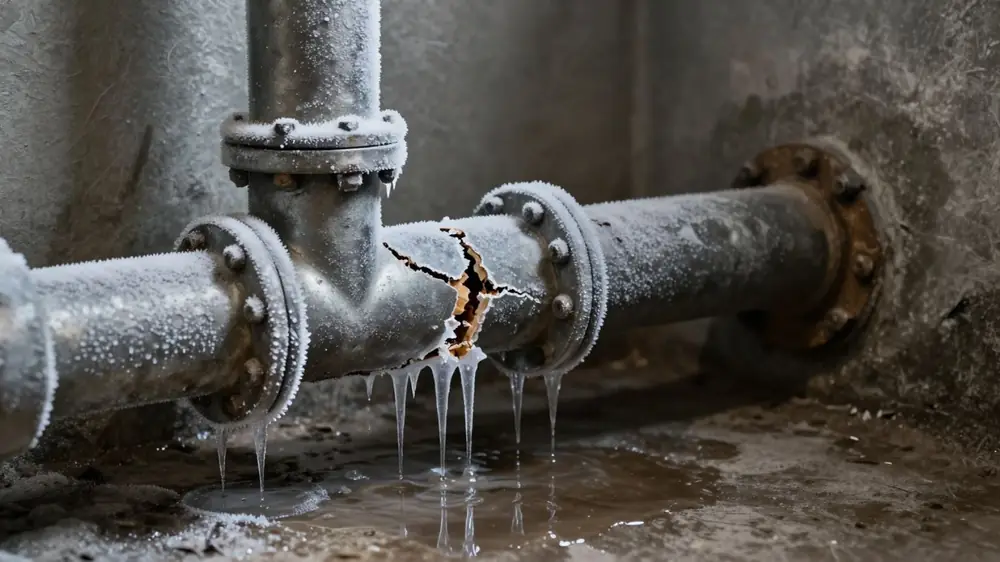
How we dry a house after a freeze loss
The plumber repairs or replaces the pipe. Once the supply is closed we pull standing water with extraction wands, then map the wet area with moisture meters and a thermal imaging camera. Wet attic insulation, soaked ceiling board and wet carpet pad are removed because they hold water too long to dry in place.
Air movers and LGR dehumidifiers dry what remains, and daily readings decide how long they stay. ANSI/IICRC S500 is the reference for how water is classified and how drying is verified. Freeze losses can span several rooms at once, so the crew plans the equipment by room rather than by the break.
If power is out in your neighborhood, tell the dispatcher. Drying equipment needs electricity, and the plan has to match what is available at your address.
Scope and cost factors after a freeze
| Factor | Why it matters |
|---|---|
| Number of breaks | Several cracks mean several wet areas to find and dry |
| Attic or wall location | Attic water reaches ceilings below, wall water reaches floors |
| Insulation involved | Wet insulation is removed and replaced |
| Rooms affected | More rooms mean more equipment and more drying days |
| Time since the thaw | Water that sat longer has soaked deeper into materials |
Scope and price are explained before work starts. A call to (817) 623-9267 is the quickest way to find out which of these factors apply to your house.
Insurance and freeze damage claims
Many policies treat a pipe that bursts from freezing as sudden and accidental, but terms differ. Some policies expect heat to be maintained in the home, and a vacant house can be handled differently. Read the freeze section of your policy and ask your agent before you assume anything.
If a flood from a creek or storm drain caused the water, standard homeowners policies usually exclude it, and that is a different claim. For a freeze loss, keep photographs, the plumber's invoice and our readings, and report the loss promptly.
Prevent the next freeze and avoid these mistakes
- Let faucets on exterior walls drip during a hard freeze, as the city's own updates suggest.
- Open cabinet doors under sinks on outside walls so warm air reaches the pipes.
- Wrap exposed outdoor pipes and drain irrigation lines before the cold arrives.
- Disconnect garden hoses and cover hose bibs.
- Add insulation to attic and garage lines before winter, not during the storm.
- Know where the main valve is, and close it if you will be away from home.
- Do not turn the heat down to save money when a hard freeze is forecast.
- Do not wait for the thaw to look for damage.
Related services and nearby towns
After the structure is dry, the water damage repair page explains the rebuild. Freezes reach every town around Coppell, and the same crew covers Grapevine and Lewisville.
Frozen pipe questions
Is emergency frozen pipe water damage restoration available in Coppell?
Yes, including during hard freezes, when many households call at once. Call (817) 623-9267, close the main valve if you see water, and describe what you found. We do not promise an arrival time, but you will get first steps before the visit is set up.
Should I try to thaw the pipe myself?
You can open the faucet and use warm air from a hair dryer on a dry floor. Never use a torch or open flame. If you see a split or the pipe is inside a wall, call a plumber first and close the main valve.
Does every frozen pipe burst?
No. A pipe can freeze and thaw without cracking. A crack is more likely where ice builds between a blockage and a closed faucet, which is why leaving a faucet open or dripping helps.
Should I turn off the water if my pipes are frozen but nothing has leaked?
If you cannot tell whether a pipe has split, closing the main valve before the thaw is a safe choice. You can open it again once the plumber confirms the lines are sound.
How soon after a thaw does damage show up?
It can show within hours when a pipe is exposed, or after a day or more when water falls into insulation first. Check ceilings and low walls repeatedly as temperatures rise.
Does insurance cover frozen pipe damage?
Often it does as a sudden loss, but policies differ on heat requirements and vacant homes. Ask your agent, keep your records and report the loss quickly.