
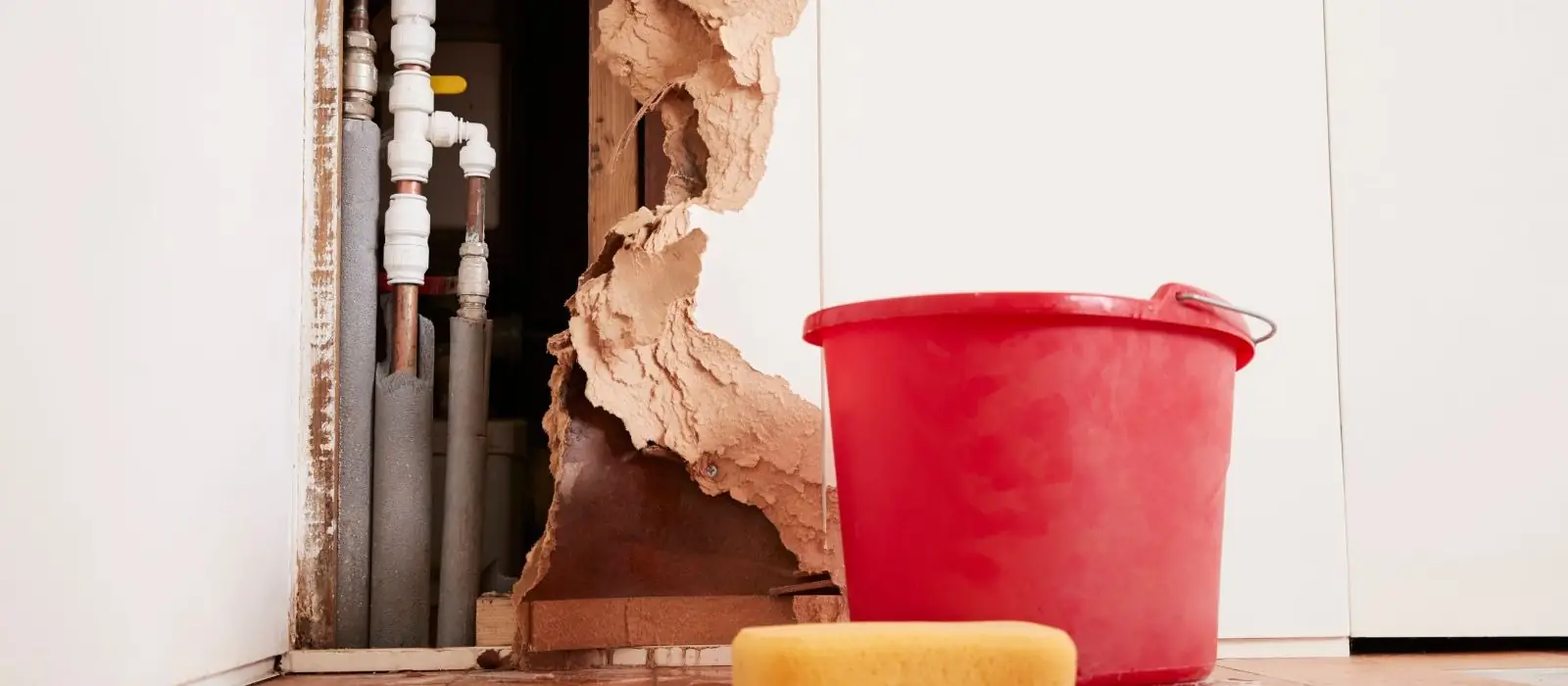
A burst pipe is different from a slow drip. A pressurized supply line, whether it is copper, PEX or CPVC, can fail at a joint, a fitting or a fixture connection. The water keeps coming at line pressure until the supply is closed. Close the main valve first, then call (817) 623-9267 and we will start planning the water removal and drying.
This page covers water from a supply line that failed on its own. If the pipe split because of a hard freeze, the thaw sequence matters, and the frozen pipe water damage page covers it. If the water came from a tank, see water heater leak cleanup.
How a supply line fails inside a Coppell house
The Census Bureau's American Community Survey reports that 68.8 percent of Coppell housing units were owner-occupied in 2020 through 2024. For most households that means one person has to call a plumber and an insurer in the same afternoon, so it helps to know the order of work before the stress starts.
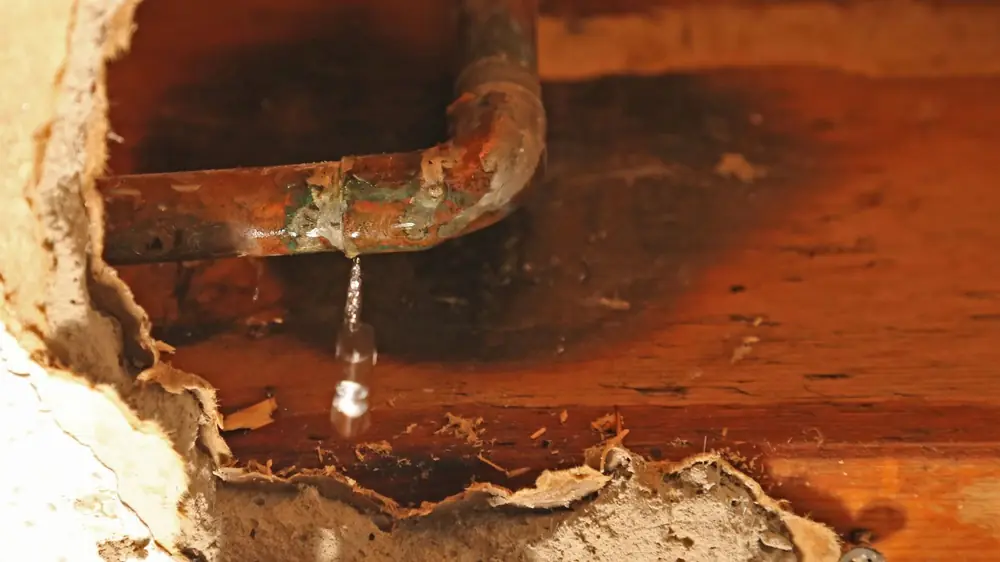
Supply lines fail in a handful of ways. A compression fitting works loose, a soldered joint lets go, a braided connector under a sink splits, or a pipe rubs against a stud until the wall wears through it. Many lines run through attics and between floors, so water often travels down a wall cavity or pools above a ceiling before anything shows.
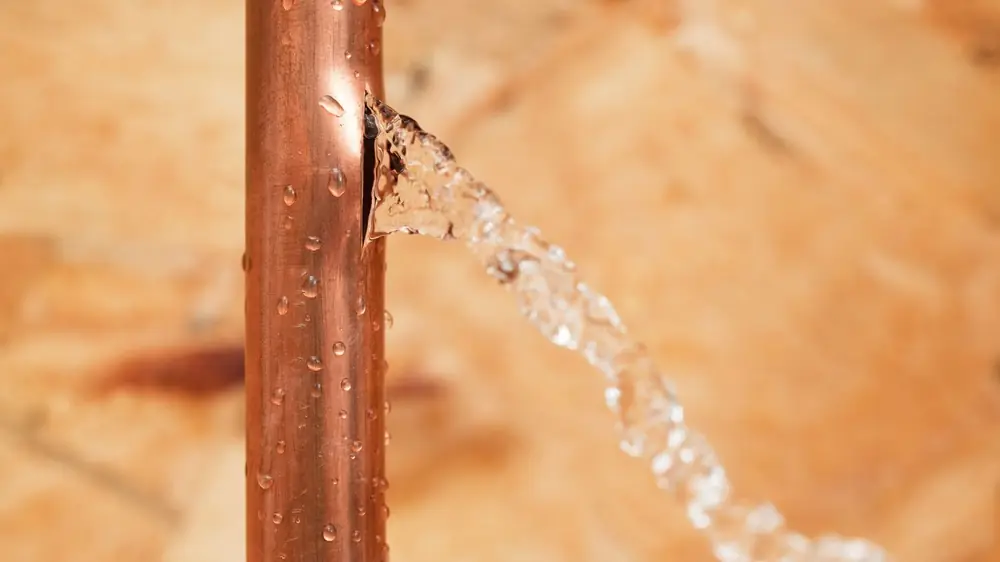
Pressure is what separates a burst from a spill. A line carrying household pressure keeps delivering water for as long as the supply stays open, which is why the first few minutes matter more than they do with a leaking drain.
What you see and what it usually means
| What you see | What it usually means | What to do first |
|---|---|---|
| The sound of running water with every tap closed | A supply line is open somewhere inside the structure | Close the main valve, then check whether the meter still moves |
| A ceiling bubble or brown stain that keeps spreading | Water is collecting above the ceiling from an attic or upper floor line | Close the main valve and stay out from under the stain |
| A wall that feels warm or damp | A hot water line inside the wall is leaking | Close the main valve and the water heater inlet |
| Baseboards swelling and paint blistering | Water has been moving through the wall for some time | Call dispatch and do not paint over it |
| Wet carpet along one wall | A line behind or above that wall is wetting the floor | Lift small items and photograph the area |
Safety steps in the first minutes after a pipe bursts
Close the main water valve before anything else. The City of Coppell's winter weather FAQ tells residents that when a pipe breaks they should shut off the water as soon as possible, and the city posted a video that shows how to open the water meter lid and turn off the supply. If you cannot reach the valve at the house, use that guidance and ask the city's Public Works staff to help with the shut-off.
- After the main is closed, open one low faucet to drain the line and ease pressure.
- If the hot line is the source, switch off the water heater so it does not run dry.
- Photograph the damage before you move anything.
- Lift rugs, electronics and paperwork off wet floors.
- Keep children and pets out of rooms where the ceiling is sagging.
Water near electricity
If water is dripping through a light fixture or ceiling fan, or reaching an outlet or the panel, stay out of the room. Cut power at the breaker only if you can reach it while standing on dry floor. Call 911 for sparks, a burning smell or any risk of shock.
Close the valve, then call the dispatch line
Tell the dispatcher where the water is coming from and which rooms are wet, and the dispatcher will give you first steps while the visit is set up.
How we remove the water and dry what it touched
The plumber stops the leak. Our work starts with everything the water reached. The crew confirms the supply is closed, then uses submersible pumps or extraction wands to take standing water and wet carpet. Moisture meters and a thermal imaging camera show how far water traveled inside walls and above ceilings, which a visual check cannot do.
Water from a clean supply line starts as Category 1 under ANSI/IICRC S500, and it can degrade as it sits in insulation and carpet pad. Ceiling board that has sagged, wet insulation and soaked pad come out. Where water ran down a wall, a flood cut removes the wet lower section so the cavity can dry.
Air movers and LGR dehumidifiers then run while readings are logged each day. The same standing-water methods are described on the emergency water removal page, and the drying stage has its own page on structural drying and dehumidification.
Where the plumber stops and restoration starts
The City of Coppell states that plumbing repairs require a permit and inspection, which help make sure the work is done by a qualified, licensed plumber. Texas Occupations Code section 1301.051 lets a property owner do plumbing in their own homestead, so check with the city before you try the repair yourself.
Our crew does not replace pipe. We work around the plumber so wet materials can come out and drying can begin. Ask the plumber to leave any access opening in the wall until the crew has taken moisture readings, because that opening is often the clearest view of what stayed wet.
What sets the scope and cost of a burst pipe job
| Factor | Why it matters |
|---|---|
| How long the line ran | More running time means more materials soaked |
| Where the pipe sits | A line in an attic or between floors wets more levels than one under a sink |
| Ceilings and insulation | Sagging ceiling board and wet insulation have to be removed |
| Floor type | Carpet and pad, tile, laminate and hardwood each dry or fail differently |
| Hidden spread | Wall cavities and subfloors may need openings so they can dry |
| Drying days | Equipment time follows daily readings, not a set schedule |
Scope and price are explained before work starts. Call (817) 623-9267 and describe what you see, and the dispatcher can tell you which of these factors apply to your house.
Insurance and a burst pipe claim
Policies differ, so read yours. A pipe that fails suddenly is usually handled as sudden and accidental discharge, while damage from a leak that has run for weeks or months is often excluded as long-term seepage. A burst supply line is a plumbing loss, not a flood, because flood coverage applies to rising surface water.
Document everything. Keep photographs and video, the plumber's invoice, and the moisture readings and equipment log from our crew. If the plumber saves the failed section of pipe, keep it. Many policies expect you to take reasonable steps to limit further damage, and closing the valve and starting drying are those steps.
Mistakes to avoid after a pipe bursts
- Waiting to see whether a ceiling stain stops growing.
- Closing only the fixture shutoff when the break is upstream of it.
- Painting over a stain before the cavity is dry.
- Running a household fan and calling the room dry.
- Throwing wet materials away before they are photographed.
- Turning the water back on before the plumber confirms the repair.
Related services and nearby towns
Once the structure is dry, rebuilding is covered on the water damage repair page. The dispatch line also covers towns around Coppell, including Carrollton and Irving, where the same steps apply.
Burst pipe questions
Is emergency burst pipe water damage cleanup available in Coppell?
Yes. The dispatch line is answered around the clock, including nights, weekends and holidays. Close the main valve if you can, then call (817) 623-9267 and describe where the water is coming from. We do not promise an arrival time, but the dispatcher will tell you what to do while a crew is arranged.
Should I shut off the water or call you first?
Shut off the water first if you can do it safely. Every minute the line runs adds to the damage, and the dispatcher can talk you through the rest once the supply is closed.
Does a burst pipe in a wall mean the wall has to come out?
Not always. Moisture readings and a thermal image show which parts of the wall are wet. Sections that are soaked through or hold wet insulation are removed, and sound sections are dried in place.
Will my insurance cover a burst pipe?
Many policies cover sudden and accidental water damage, but terms vary and long-running leaks are often excluded. Call your insurer promptly and give them the photographs, the plumber's invoice and our drying records.
Who fixes the pipe, a plumber or your crew?
A licensed plumber fixes the pipe. Our crew removes the water, takes out wet materials and dries the structure so the plumber and the rebuild can proceed.
How long does drying take after a burst pipe?
It depends on what the water touched. Carpet and drywall dry or come out quickly, while framing and hardwood take longer. Daily moisture readings decide when the equipment can be removed.