
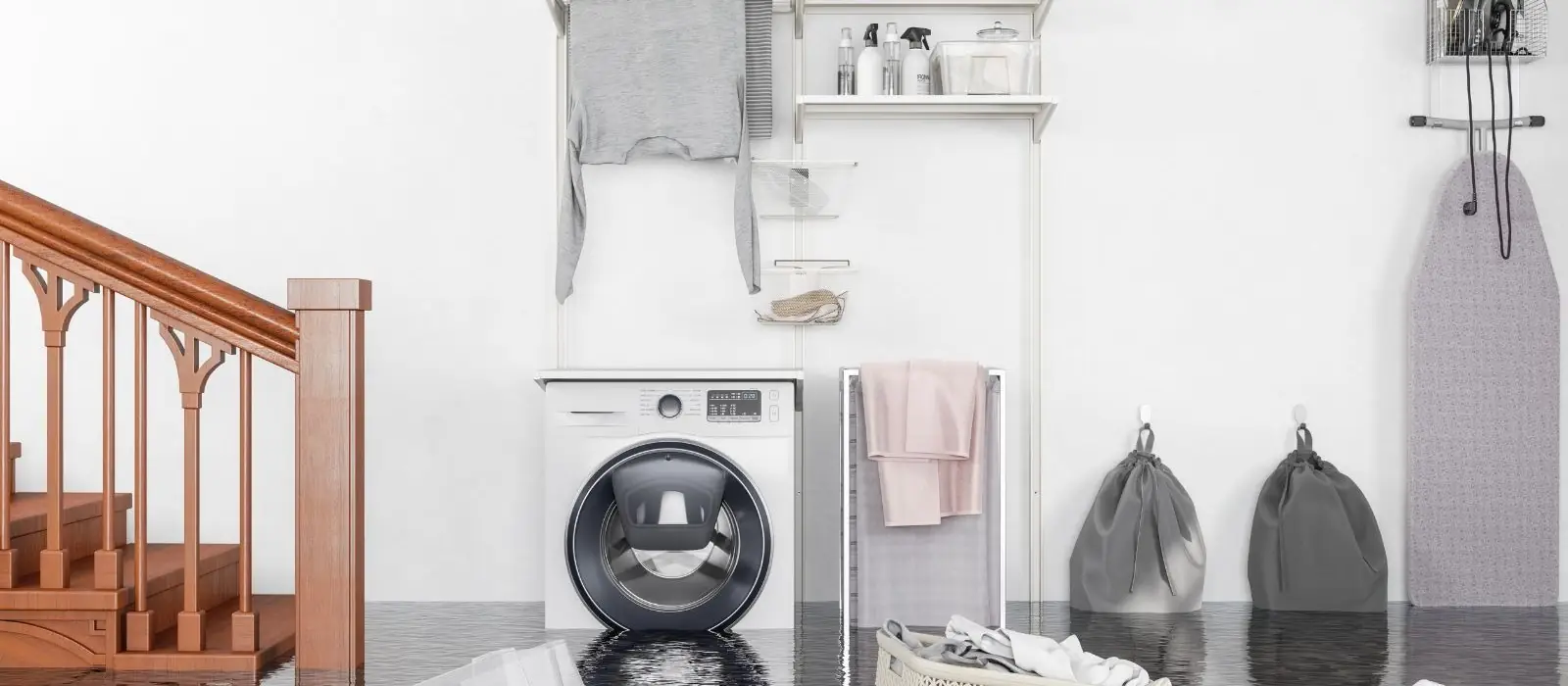
An appliance leak is water that escapes from a machine you own instead of from a pipe in the wall. The usual sources are a dishwasher, a washing machine, a refrigerator ice maker line and the drain hose that serves any of them. The leak can be a sudden failure or a slow drip that runs for weeks.
If water is on the floor right now, call (817) 623-9267 and describe the appliance. The dispatcher will tell you what to shut off while a crew is arranged.
Where appliance leaks start and why they stay hidden
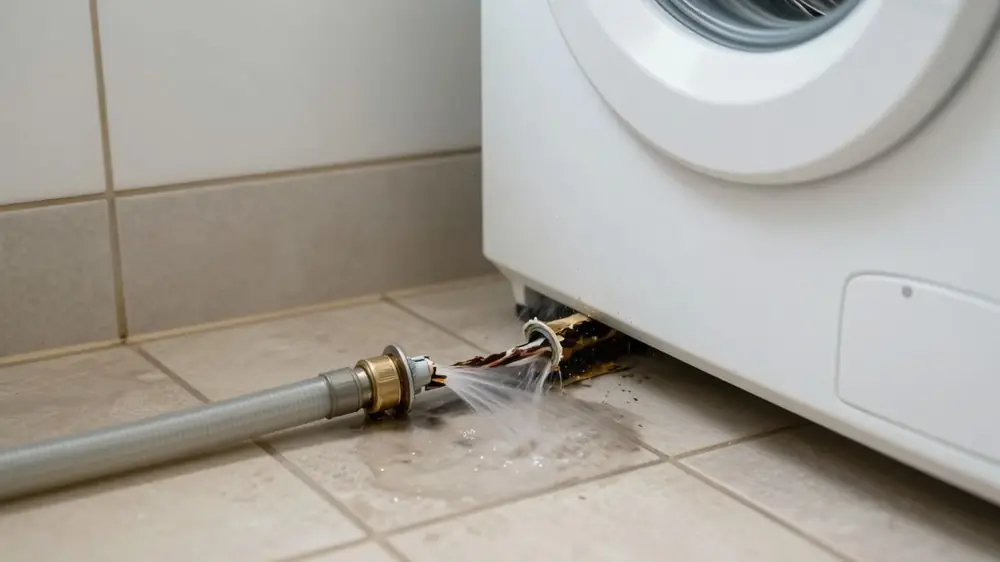
Most appliance leaks begin at a connection, not in the machine itself. A supply hose cracks at the fitting, a drain hose slips off its clamp, a gasket hardens, or a small plastic line to the ice maker splits behind the refrigerator. Each of these sits in a spot you rarely look at.
That is why the damage is often larger than the leak looks. Water runs under the appliance, follows the floor slope and soaks the toe kick, the back of a cabinet or the drywall behind a laundry closet. By the time a stain shows, the wet area is usually wider than the stain.
Your water meter can tell you whether water is moving when nothing should be running. The City of Coppell says the last two digits after the decimal on the meter work as leak indicators for continuous flow. Check them with every faucet and appliance off, wait a few minutes, and look again.
The City also says its advanced meters let customers set a leak alert through the MyH2O customer portal. That alert will not name the appliance, but it can tell you that water is running somewhere in the house.
Signs that point to an appliance
| What you notice | What it usually means | Where the water may be |
|---|---|---|
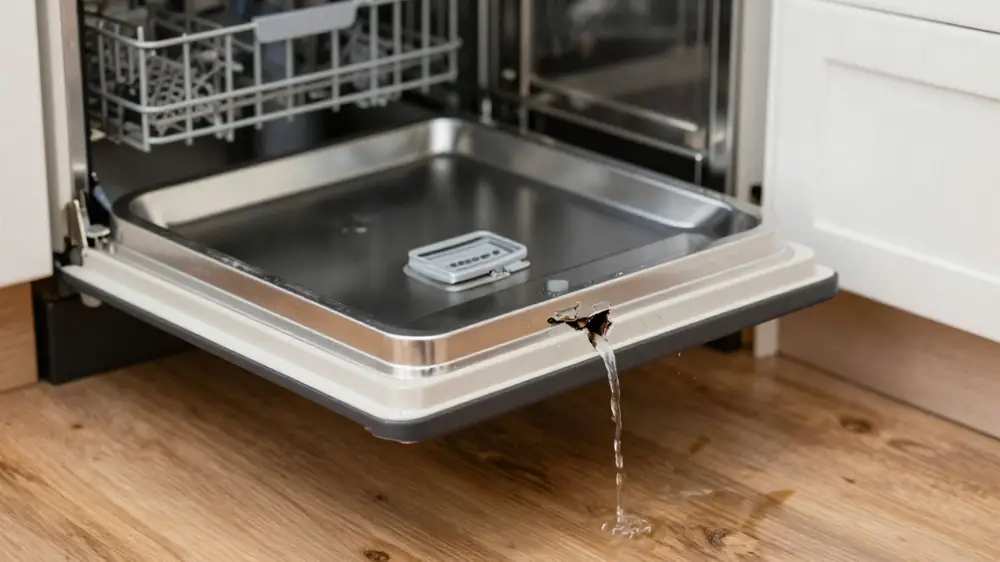
| Warped or lifting floor beside the dishwasher | A door gasket, pump hose or supply fitting is leaking slowly | Under the cabinet base and the flooring next to it |
| Damp baseboard or soft drywall in the laundry area | A washer hose, valve box or drain standpipe is failing | Inside the wall behind the machine |
| Puddle or musty smell behind the refrigerator | The ice maker or water dispenser line has split | Under the unit and along the wall |
| Ceiling stain below an upstairs laundry room | Water has passed through the subfloor | Between floors and in the insulation |
| Water bill higher than usual with no change in habits | A slow seep is running between uses | Anywhere along the hose and valve path |
First-hour safety steps
Start with the machine. Unplug it only if the outlet is dry and you can reach it without stepping in water. Close the small shutoff valve on the supply line, usually behind or beside the appliance. If you cannot find it, close the main water valve for the house.
Water and electricity do not mix
If water has reached an outlet, the breaker panel or a power strip, stay out of the room and call 911 or your electric provider first. Turn off the circuit only if the panel is on dry ground and you can reach it safely.
Move rugs and small items to a dry room, take photos before anything is moved, and keep pets and children out of the wet area. Do not run a household vacuum on standing water. Then call us so the floor and wall cavities can be checked with a meter instead of guessed at.
Water behind an appliance?
Describe the machine and the room. The dispatcher will explain the first steps before anyone is on site.
How we dry out after an appliance leak
The crew starts by finding every wet surface. A moisture meter and a thermal imaging camera show water inside walls, under flooring and behind cabinet bases without cutting everything open. Standing water is removed with a wet vacuum or an extraction unit, depending on volume.
Materials that cannot dry in place come out. That can be a swollen toe kick, a section of baseboard or wet insulation behind a washer. Air movers then push dry air across the floor and wall surfaces, and LGR dehumidifiers pull moisture out of the room.
The crew returns to take readings and moves equipment as areas reach the dry goal. The industry reference for this work is the ANSI/IICRC S500 standard, which sets out how water is classified and how drying is measured. Appliance leaks are usually clean supply water, which helps, but only if drying starts quickly.
What sets the scope and cost of the job
| Factor | Why it matters |
|---|---|
| How long it leaked | A leak found on day one is a drying job, while weeks of seepage may involve removal |
| Flooring type | Tile dries differently from laminate, vinyl plank or hardwood |
| Cabinet and wall involvement | Water behind cabinet bases or drywall adds removal and access steps |
| Floor level | An upstairs leak can reach the ceiling and insulation below |
| Equipment days | Daily readings decide how long equipment stays |
We do not quote a price without knowing what got wet. Call (817) 623-9267, describe what you see, and the scope and price are explained before work starts. The plumber or appliance technician who replaces the failed part is a separate trade, and restoration does not replace that repair.
Insurance: sudden failure versus slow seepage
The Texas Department of Insurance says most homeowner and renters policies cover sudden and accidental water damage, and it lists a broken washer hose as an example. It also says policies usually will not cover damage from gradual leaks or seepage, and that includes mold that grows from them.
That difference is why timing and records matter. Photograph the damage before repairs, keep the failed hose or part if you can, and write down when you first noticed the problem. Your policy and your adjuster decide coverage, not us.
Coppell has a large owner-occupied share, with the Census Bureau reporting 68.8 percent of housing units owner-occupied for 2020 to 2024. The rest are renters. Renters should tell the property manager at once, because the building's policy and a renter's own policy cover different things.
Hose, valve and drain habits that prevent the next leak
- Replace rubber supply hoses with braided stainless hoses and write the install date on the hose or on the wall.
- Close the supply valves behind the washer when you go away for several days.
- Pull the washer and dishwasher forward once a year and look at the floor under them.
- Set a drain pan with a drain line under a washer on an upper floor.
- Check the ice maker line behind the refrigerator when you move the unit for cleaning.
- Do not ignore a small puddle, because the next one is usually larger.
If your leak has already reached the walls or ceiling, see our work on water damage cleanup and the rebuild steps under water damage repair. For a leak that started in a kitchen, the room-based approach is covered on the kitchen water damage page.
We handle appliance leaks in neighboring cities too. The same dispatch line covers water damage restoration in Irving and water damage restoration in Grapevine, each with local ZIP codes and conditions.
Frequently asked questions
Is emergency appliance leak water damage cleanup available in Coppell?
Yes. Call at any hour, since a washer hose does not fail on a schedule. Call, name the appliance and the room, and you will be told what to shut off while a crew is arranged. Do not wait for morning if water is spreading.
Can I keep using the machine until the leak is fixed?
No. A leaking washer or dishwasher puts more water on the floor with each cycle. Close the supply valve, stop using the machine and have the failed part replaced before the next load.
How do I know the water is clean supply water?
A supply hose or ice maker line carries clean water, while a drain hose carries used water from the machine. Drain leaks can contain soap and food residue, which changes how the area is cleaned. Tell the dispatcher which hose failed.
Will a small leak under the dishwasher damage the floor?
It can. Water follows the floor under the cabinet base and can swell particleboard or lift flooring edges before any stain shows. Flooring, cabinets and the subfloor are checked with a meter.
Does restoration include replacing the appliance or hose?
No. A plumber or appliance technician replaces the failed part. We dry the structure, remove materials that cannot be saved and explain what is left to repair.