
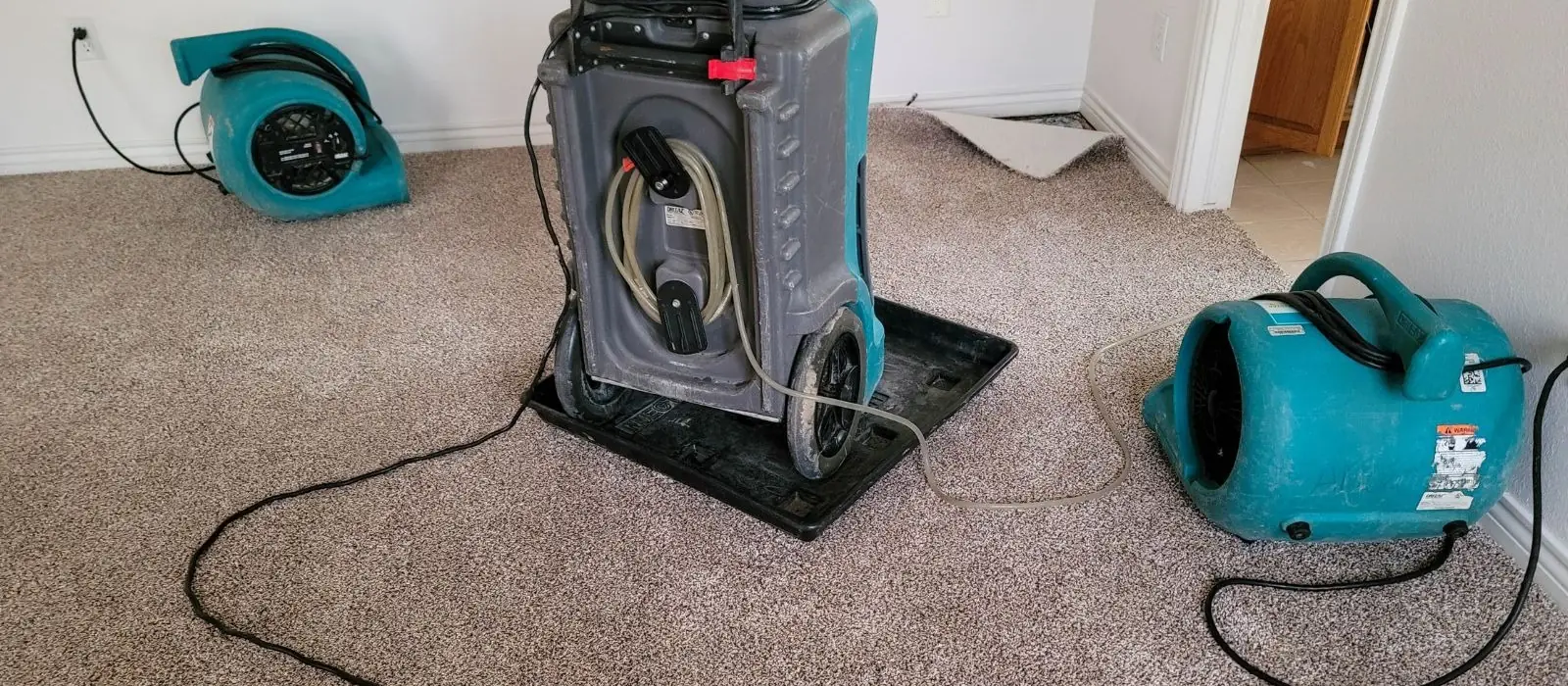
Structural drying is the part of a water loss that happens after the standing water is gone. The carpet may look fine and the floor may feel dry, yet the studs, drywall, insulation and subfloor still hold moisture. Drying removes it on a schedule backed by readings.
If water is still flowing or pooled in your home, start with water mitigation and call the 24/7 dispatch line. This page explains what comes next and why it takes days instead of hours.
Drying is a measured job, not a fan in the corner
Wet building materials release moisture only as fast as the surrounding air can take it. A box fan moves air but does nothing about the moisture already in that air. Without dehumidifiers, the water just changes rooms and settles into cabinets, closets and wall cavities.
A real drying plan controls both sides of the problem. Air movers push dry air across wet surfaces, and dehumidifiers remove the moisture those surfaces give up. The crew then checks the readings and adjusts the setup until the materials match a dry reference.
What Coppell weather does to a drying job
The National Weather Service lists a 1991 to 2020 normal annual precipitation of 37.01 inches and a mean annual temperature of 66.6 degrees Fahrenheit for Dallas/Fort Worth. Warm air holds more water vapor than cool air, so a wet house in a warm climate keeps giving moisture to the room around it until the dehumidifiers pull it out.
Summer adds a second effect. National Weather Service Fort Worth records going back to 1899 put the average first 100 degree day at DFW on July 1 and the average last one on August 27. Air conditioning runs hard through that stretch, and the crew has to coordinate with it instead of fighting it.
A running air conditioner dries the air it cools, which helps. It also pulls drying air out of a sealed work area if the doors are open. We close off the wet rooms, keep the house cool for the equipment and leave the system running unless a reading says otherwise.
Signs a wet house is not drying on its own
| What you notice | What it usually means |
|---|---|
| Floor feels dry but the baseboard is cool to the touch | Water is still in the wall bottom plate or insulation |
| A musty smell returns every afternoon | Moisture is escaping from a hidden cavity as the house warms |
| Paint bubbles or drywall tape lifts after the leak is fixed | The drywall is still holding water behind the surface |
| Windows fog or a room feels sticky near the affected area | Indoor humidity is higher than the dry reference |
| Wood floor cups or gaps open weeks later | The subfloor never reached its dry target |
The EPA guidance on moisture and mold says water-damaged areas and items should be dried within 24 to 48 hours to prevent mold growth. That window is why drying equipment goes in on the first day and not after the repair estimate is signed.
Electrical and air safety before equipment goes in
Drying equipment draws power, so the crew checks the circuits before setting up. They look for wet outlets, tripped breakers and water near the panel. If power is unsafe in a room, they run cords from another circuit and leave that room's outlets off.
Keep children and pets out of the work area. Do not unplug equipment or open the sealed doors to peek in. Disturbing the setup lets drying air escape and slows everything down.
Electrical or gas risk comes first
If water has reached the panel, outlets are sparking or you smell gas, leave the area and call 911 or your utility before you call us. Shut off power only if you can reach the breaker without standing in water.
If the water that soaked the house was sewage or creek water, ask about water damage cleanup first. Contaminated materials come out before drying starts, because drying them in place spreads the contamination.
Wet walls or a damp floor after the water stopped?
Call the 24/7 line and describe the rooms. The dispatcher will tell you whether drying equipment is the next step.
How a drying plan is set and run each day
Measure the dry reference
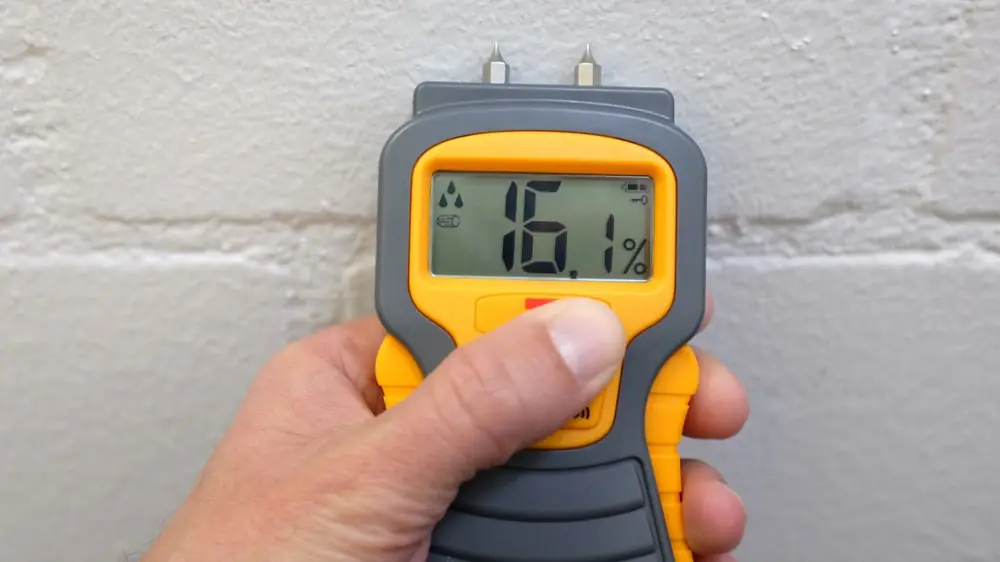
The crew reads the same material in an unaffected room. That number becomes the dry goal for drywall, wood and subfloor.
Map the water
Moisture meters and a thermal imaging camera show where water traveled, including behind baseboards and under cabinets.
Remove what cannot dry
Soaked insulation, saturated carpet pad and swollen drywall come out so they stop feeding the air with moisture.
Set the equipment
Air movers go on wet surfaces and LGR dehumidifiers go into a closed work area. The count depends on the volume of air and the number of wet surfaces.
Log and adjust
Every day the crew records temperature, humidity and material readings, then moves or removes equipment as areas reach the goal.
LGR stands for low grain refrigerant. These dehumidifiers pull water out of air that is already fairly dry, which matters in the last stages of drying. Desiccant units are for cold or special conditions, and a Coppell summer house rarely needs one.
Wall cavities, subfloors and places air cannot reach
Open floors dry easily. Wall cavities do not. Water wicks upward inside drywall and into the insulation behind it, where no air movement reaches. The crew either removes the bottom of the wall or drills small holes near the baseboard and pushes warm dry air through the cavity.
Subfloors under tile and laminate follow the same logic. If the floor covering is sealed on top, water has nowhere to leave. Lifting a few boards or tiles and running air beneath them can save a floor that would otherwise cup or stain.
Walls that must be opened for drying are rebuilt later. The wall and drywall repair page explains what that stage involves, and the carpet water damage page covers floors that are lifted instead of replaced.
How we decide the equipment can come out
Equipment stays until the readings say the structure is dry, not until a fixed number of days passes. Most losses involve several materials, and each one reaches its goal at a different time. Hardwood, plaster and framing usually take longer than carpet or drywall.
When every material matches its dry reference on two checks in a row, the crew pulls the equipment and the dry readings go into the file. That log is also the record a repair contractor or adjuster may ask to see.
What sets the scope and cost of a drying job
| Factor | Why it matters |
|---|---|
| Water category | Clean, gray and contaminated water need different handling before any drying begins |
| Wet area and volume of air | More square footage and more cubic feet mean more equipment |
| Materials involved | Hardwood, plaster and concrete hold water longer than carpet and drywall |
| Time since the loss | Older water has soaked deeper and may have started to affect finishes |
| Hidden spread | Wet insulation and cavities add removal and cavity drying steps |
| Number of drying days | Equipment time follows the daily readings |
Scope and price are explained before work starts. Call (817) 623-9267 and describe the rooms, and the dispatcher can tell you what usually decides the plan for your situation.
Insurance and the drying log
Many homeowner policies cover water damage that is sudden and accidental, such as a burst supply line, and treat slow seepage or long neglected leaks differently. Flood water from outside the house is usually a separate coverage. Read your policy or call your agent before you assume either way.
The drying log helps because it shows what was wet, what was removed and how long the equipment ran. Photographs, daily readings and equipment counts give an adjuster a written account of the work instead of a recollection.
After the structure is dry, rebuilding may need a permit. The City of Coppell lists a Residential Remodel permit type, and it requires every contractor performing work in the city to be registered with the City, with registration expiring after one year.
Drying mistakes that lead to mold
- Shutting equipment off at night to save noise or power, which resets the drying clock.
- Opening the doors of the sealed work area to check on progress.
- Closing up walls or laying new flooring before the readings match the dry reference.
- Drying contaminated materials in place instead of removing them first.
- Skipping a hidden cavity because the visible floor looks dry.
If a musty smell appears after drying, the next step is an inspection, not more fans. The mold remediation page explains how moisture and mold are checked and removed.
The same drying approach applies in nearby towns. We handle water damage restoration in Irving and water damage restoration in Grapevine with the same readings and the same daily log.
Industry practice for drying follows the ANSI/IICRC S500 standard for professional water damage restoration, which you can ask any company to explain in plain terms.
Frequently asked questions
Is emergency structural drying available in Coppell?
Yes. Calls are taken at any hour, and drying equipment can be arranged on the same day when a crew is available. Call, describe the rooms that are wet and the dispatcher will tell you what to do until equipment arrives.
How long does structural drying take?
Many jobs run several days, but there is no fixed number. The crew checks the readings each day and removes equipment as materials reach their dry goal. Hardwood and plaster can take longer than carpet and drywall.
Can I use my own fans and a store dehumidifier?
They can help in a small, clean, recent spill. They rarely handle wet walls, subfloors or contaminated water, and they do not give you readings. If water reached a wall or the loss is more than a day old, call for a moisture check.
Will the equipment raise my electric bill?
Yes, running air movers and dehumidifiers for several days uses electricity. Ask the dispatcher how many units your job needs, because the count depends on the size of the wet area and the materials involved.
Do I need to leave the house during drying?
Most people stay home. The equipment is loud, so some sleep in a dry room away from the work area. Leave if the water was contaminated, if the air feels unhealthy or if the crew advises it.