
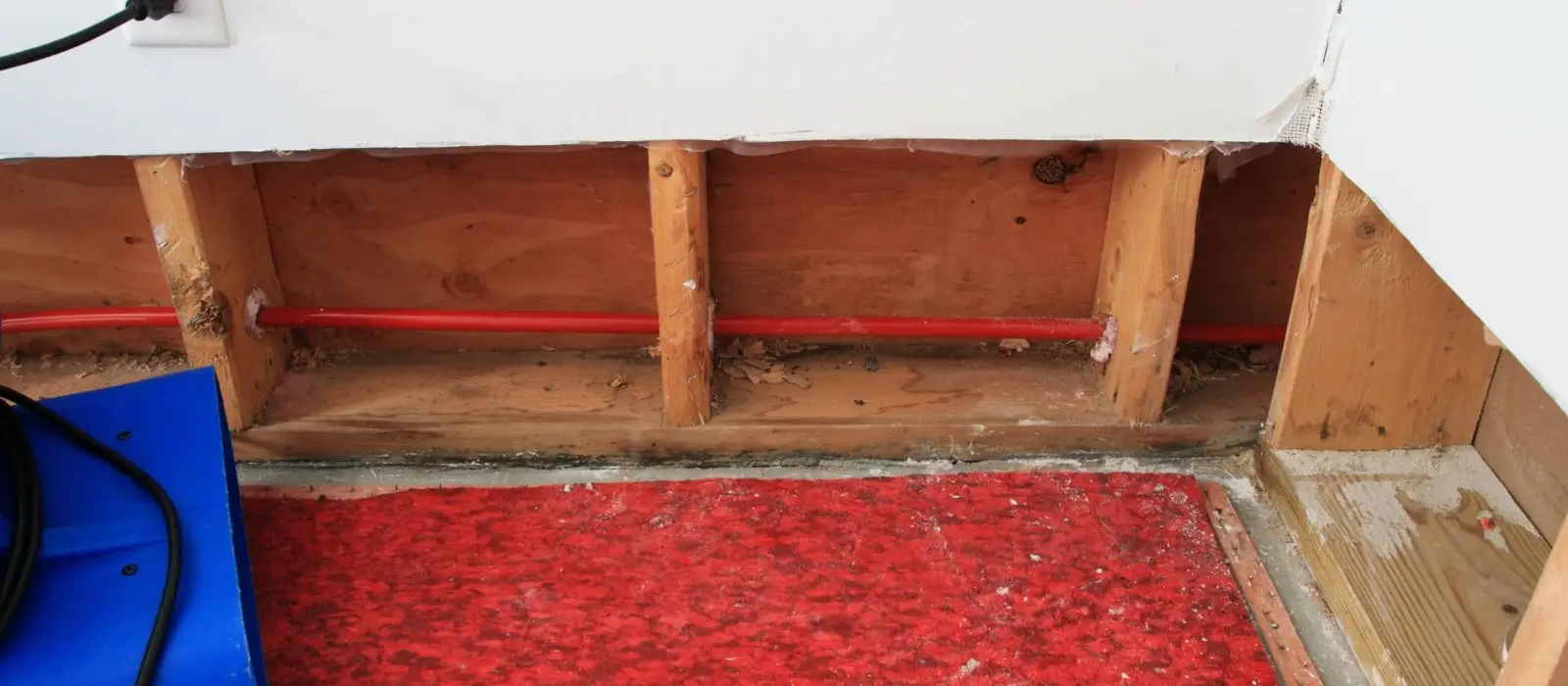
Water gets into walls from supply lines, drain lines, appliance hoses and floods that rise past the baseboard. Once it is in, the drywall paper, the insulation and the bottom plate all take it up. This page covers walls. Ceilings are handled on their own pages, and floors are covered on the carpet water damage page.
If water is still running, shut it off first and call the dispatch line. The wall can wait a few hours, but the water cannot.
What water does to a wall
Standard drywall is gypsum between two sheets of paper. The paper wicks water upward like a candle wick, so a wall that stood in an inch of water at the floor can be wet a foot or more higher. Wet gypsum softens, loses strength and can crumble when pressed.
Behind the drywall sits fiberglass or other insulation, which holds water against the studs. The bottom plate, the horizontal board at the base of the wall, soaks up water from below. Baseboard trim swells at the lower edge and sometimes pulls away from the wall.
Studs are usually solid wood and often dry and survive. The surfaces that go bad first are the paper face of the drywall, the insulation and the finish on the trim.
What you see on a wet wall and what it means
| What you see | What it usually means |
|---|---|
| Paint bubbles or peels near the floor | Water is behind the paint and still wicking upward |
| Soft, crumbly drywall when pressed | The gypsum is saturated and will not recover |
| Baseboard gaps or a swollen lower edge | The wall bottom is wet or the trim absorbed floodwater |
| A tide line or brown stain climbing the wall | Water moved upward through the paper, carrying dirt with it |
| Musty smell with no visible damage | The cavity or insulation is wet behind intact drywall |
| Cold or damp spot on an interior wall | A supply or drain line may be leaking inside the cavity |
Electrical and cutting safety around wet walls
Walls hold wiring, outlets and sometimes gas or water lines. Cutting into a wet wall without knowing what is behind it risks a shock or a punctured pipe. Our crew checks the circuits first, shuts off power to the affected area where needed and cuts shallow, along marked lines.
Homeowners should not cut into a wet wall that has outlets, switches or a panel nearby. Photograph the damage, mark the visible wet line with a pencil and leave the opening to the crew.
If water is near outlets or the panel
If an outlet is wet, a light flickers or you smell burning, leave the area and call 911 or your electrician. Shut off the breaker only if you can reach it on dry ground.
Wet wall or stained baseboard?
Call the 24/7 dispatch line and describe what the wall looks like. The dispatcher will tell you whether it needs to be opened.
How high the wall is cut and why
A flood cut removes the wet lower section of drywall along a straight line. The cut is made above the highest point where moisture readings show water, with a margin for wicking. For many losses that margin is a foot or more above the visible mark, and the crew uses a moisture meter to find the true line.
A straight, level cut matters for the repair. A new sheet can be fastened to a stud at the cut line, and the seam sits where it can be taped and finished without bumps. A ragged cut leaves gaps that show through the paint.
A thermal imaging camera helps by showing cool, wet areas behind the surface. Moisture readings then confirm it. Where water came from a pipe in the wall, only the section around the leak may need to open. Where it came from the floor, the whole lower band usually does.
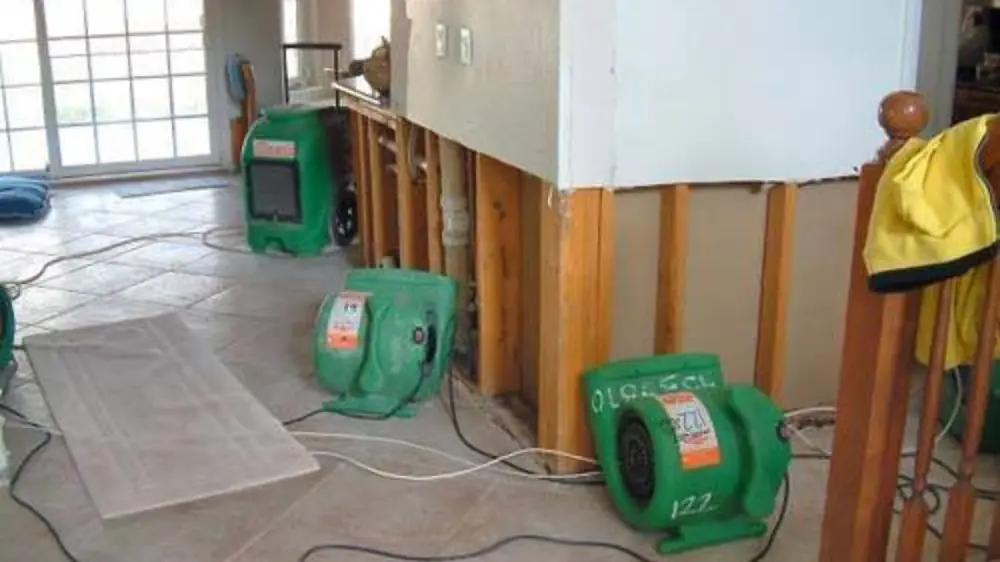
Drying the wall cavity before it is closed
Closing a wall over wet framing is the most common way a water repair turns into a mold problem. Insulation that stays wet is removed and replaced, not dried in place. Studs and the bottom plate are dried with air movers and low-grain refrigerant dehumidifiers until they match a dry reference taken from an unaffected wall.
Federal EPA moisture guidance puts the drying target at roughly two days, which is why the cut is made on the first visit and not after the repair estimate. The full drying process, readings and equipment are explained on the structural drying and dehumidification page.
Older-material safety: asbestos and lead paint
Not every wall is made of plain drywall and fresh paint. The EPA lists textured paint and patching compounds used on walls and ceilings among the places asbestos may be found, and says exposure may occur only when the material is disturbed or damaged. Cutting and sanding wet drywall disturbs it.
The EPA also says homes built before 1978 are more likely to have lead-based paint, and that anyone paid to disturb paint in housing built before 1978 must hold federal lead-safe training under the Renovation, Repair and Painting rule. Baseboard and wall paint in an older home falls under that rule.
The Texas Department of State Health Services decision chart for renovation states that a single-family dwelling, or an apartment or condominium of four or fewer units, falls outside the Texas asbestos notification rules, and adds that worker protection rules may still apply. That does not mean the material is safe to break up. If your home is older, ask for a test before anyone sands or demolishes textured walls.
We have not confirmed the typical year Coppell homes were built, so look up the build year of your own house. If it was built before 1980 or you do not know, say so when you call.
From open wall to finished wall: the repair stage
Confirm the wall is dry
Moisture readings on the studs, plate and back of the remaining drywall match the dry reference before any new board goes up.
Replace insulation
Wet insulation is discarded and new insulation is fitted to the cavity if the wall is exterior.
Hang new drywall
New sheets are cut to the cut line, fastened to studs and trimmed so seams fall on framing where possible.
Tape, mud and sand
Seams are taped and coated in several thin coats, then sanded smooth. Dust is controlled and contained.
Texture and match
Texture is sprayed or hand applied to match the surrounding wall, which often takes test patches to get right.
Prime, paint and trim
Primer seals the patch, paint is blended to the wall corner or the full wall, and baseboards are reinstalled or replaced.
Texture matching is the stage people notice. A smooth patch on a textured wall looks like a bandage. We test the pattern on scrap board and match it before the final coat.
Restoration dries and rebuilds the wall. The source of the water is a separate job. A plumber repairs a leaking line, an electrician handles damaged wiring and an HVAC technician fixes a drain that overflowed.
What sets the scope and cost of a wall repair
| Factor | Why it matters |
|---|---|
| Height and length of the wet wall | More cut area means more board, insulation and finishing |
| Water category | Contaminated water means more material comes out |
| Insulation and wall type | Exterior walls with insulation need more work than bare interior walls |
| Trim and cabinets | Baseboards, doors and cabinets may need to be removed and reset |
| Texture and paint | Matching an old texture takes more coats and more time |
| Older materials | Testing and safe handling add steps in older homes |
Scope and price are explained before work starts. Call (817) 623-9267 and describe the wall, and the dispatcher can tell you what usually decides the plan.
Insurance and permits for wall repairs
Coverage usually follows the cause of the water. A sudden break inside the house is treated one way, a slow leak another, and outside flood water is a separate matter. Photograph the wall before anything is cut, keep a record of the moisture readings and ask your agent what the policy covers.
The City of Coppell says it requires building permits for all commercial or residential construction or demolitions in the city, and lists Residential Remodel among its permit types. Call the Building Inspections division at 972-304-3500 to ask whether your repair needs one. The City also requires every contractor performing work in Coppell to be registered.
Mistakes to avoid and ways to prevent wall damage
- Painting over a stain or bubble before the wall is dry.
- Closing the wall while the studs or insulation are still wet.
- Cutting into a wall without checking for wiring or pipes.
- Sanding old textured walls or old paint without testing first.
- Replacing only the visible drywall and leaving the wet insulation behind.
Prevention is mostly about whatever runs inside or against a wall. Touch the baseboard now and then, look for bubbling paint and note any new musty smell. A small stain that grows between two checks is worth a call before the wall softens.
If a musty smell remains after drying, the mold remediation page explains how moisture and mold are inspected and cleaned. We also handle wall water damage in Carrollton and Grapevine.
Frequently asked questions
Is emergency wall and drywall water damage repair available in Coppell?
Yes. A wet wall is a same-day concern, and the line is staffed around the clock. Call, describe the wall and the source of the water, and the dispatcher will explain what to do until a crew arrives. A wall near outlets or a panel should be treated as urgent.
Does wet drywall always have to be replaced?
Not always. Drywall that was wet briefly with clean water and is firm may dry in place. Drywall that is soft, stained, crumbling or touched contaminated water is usually removed.
Why cut the wall above the stain?
Water wicks upward through the paper and the cavity, so the wet height is above what you can see. The crew uses moisture readings to find the true edge of the damage.
How long does a wall repair take?
The drying stage often takes several days, and finishing adds more because joint compound needs time between coats. The crew checks readings before closing the wall and will explain the schedule.
Will the new wall match the old texture?
Usually close, with test patches and blending. Some old textures are hard to match exactly, so the crew may blend the finish across a larger section for a cleaner result.