
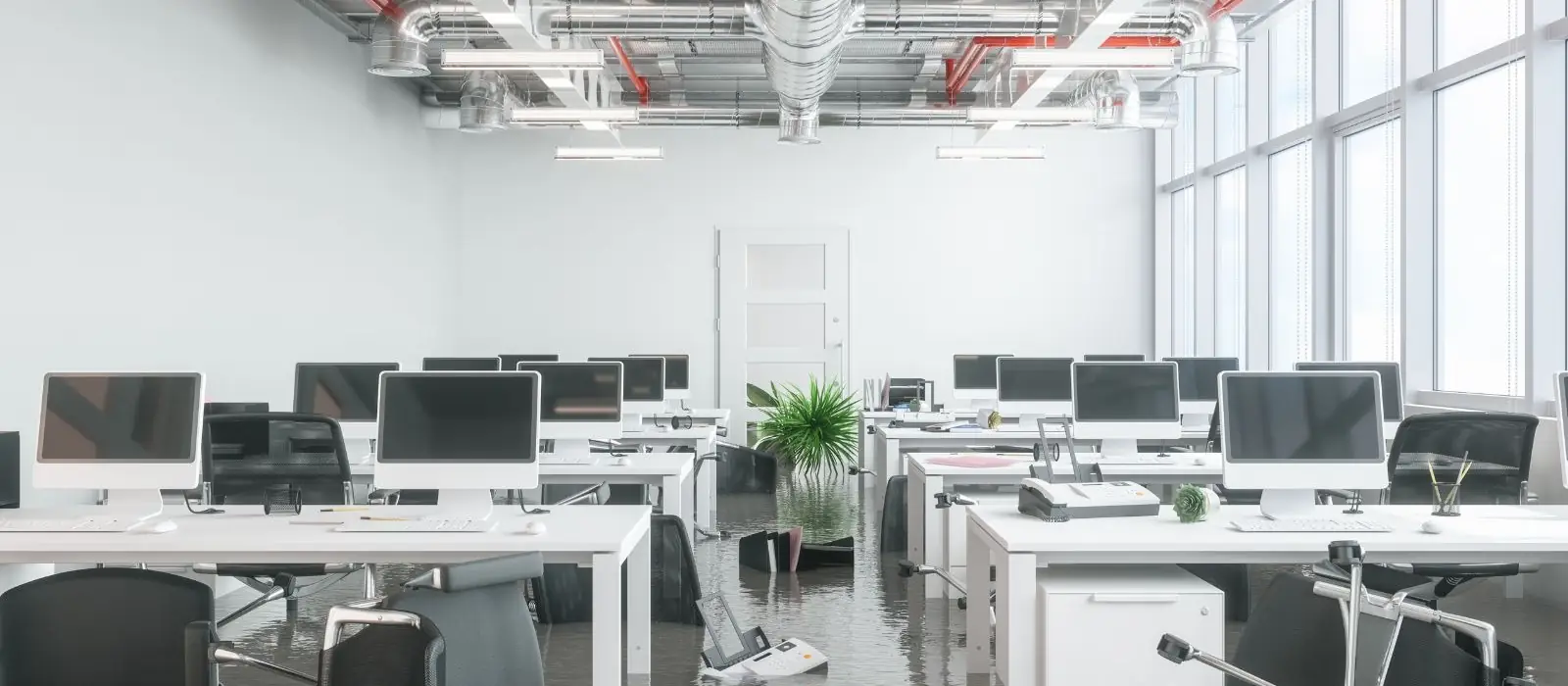
Water damage in a commercial building is a coordination problem as much as a drying problem. The same leak touches the space, the building systems, the landlord and the tenant. Our crew handles the part we can do: finding the water, extracting it, drying the structure and recording the results.
To plan a job or describe a loss, call (817) 623-9267. The dispatcher will ask what happened, how big the area is and who is making decisions.
What a commercial water loss looks like in Coppell
Texas labor market data on the city's demographics page lists a civilian labor force of 24,512 Coppell residents as of January 2025. That is a large working population, so a water loss in a Coppell building can interrupt many people.
Water gets into commercial buildings in familiar ways. Supply lines and fittings fail above ceilings. Roof drains and flashing leak after storms. Fire sprinkler lines discharge or freeze. Condensate lines overflow in a mechanical room. A neighbor's leak can come through a shared wall or floor.
Commercial buildings often have large open areas, drop ceilings and floors that run across many rooms. Water spreads along those paths quickly. A leak above one office can reach the corridor, the room next door and the floor below before anyone notices.
What you see and what it usually means
| What you see | What it usually means | What the crew checks |
|---|---|---|
| Stained or sagging ceiling tiles | Water is collecting above the grid | The plenum, insulation and ducts above |
| Wet carpet or wet floor in a corridor | Water has traveled from a source in an adjacent room | Wall bases and the subfloor |
| Damp wall near a restroom or break room | A supply or drain line is leaking inside the wall | The wall cavity and the other side of the wall |
| Musty smell in a closed office | Damp materials are holding moisture | Carpet, drywall and the area behind furniture |
| Water at the roof line after rain | A drain, flashing or membrane problem | Ceilings below the roof and the walls beside it |
Safety steps first: protecting people and records
The first safety question is whether anyone can be in the space. Water near electrical gear, lighting and equipment can be dangerous. Keep people out of any area where water meets power or where ceilings are sagging.
Electrical equipment and fire systems
Do not walk through water near panels, server racks or outlets. Have the building electrician make the area safe. If a sprinkler line has discharged, call the building's fire protection contractor, and let the building manager contact the fire department about the system.
Shut off the water source if you can find the valve, and let the building manager know right away. Move paper records, inventory and electronics out of the wet area. Take photos of the damage before anything moves.
Water in your building?
Call and describe the area, the source and who manages the property. We will explain what a first visit covers.
Our process: assess, extract, dry, document
A crew member starts with a walk through. Moisture meters and a thermal imaging camera show which walls, floors and ceilings are wet. The result is a written map of the affected area that the manager and insurer can use.
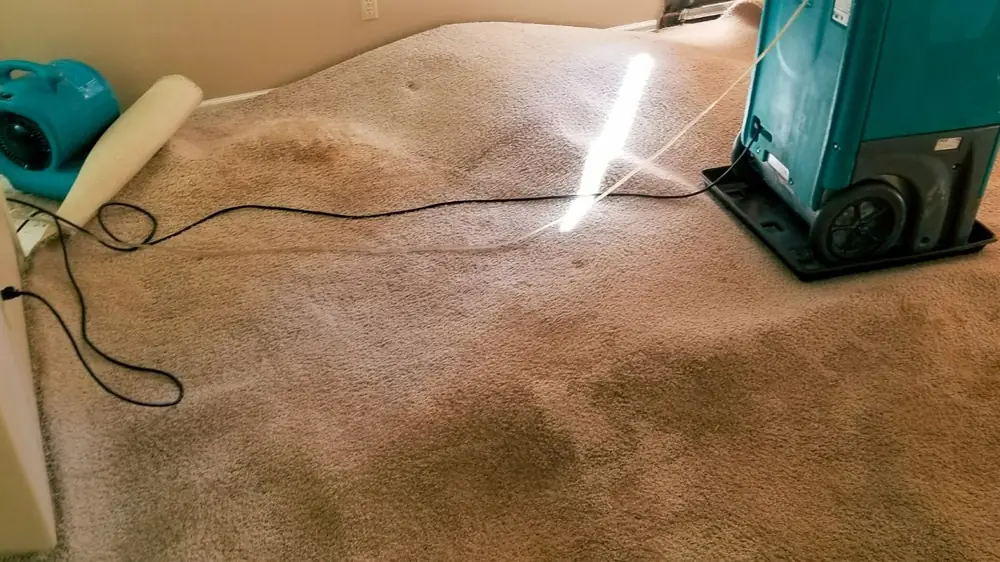
Extraction units remove standing water. Wet carpet pad, ceiling tile and insulation that cannot be dried are removed. Air movers and LGR dehumidifiers are set to dry the structure, and HEPA air scrubbers can clean the air when materials are opened.
Drying follows the ANSI/IICRC S500 standard. Moisture readings are taken at each visit and logged. The record shows the starting readings, the equipment placed and the readings when the materials reach their dry goal. For more, see structural drying and dehumidification.
Working in phases around occupied space
Many commercial spaces cannot close completely. Where it is safe, work can be planned in phases. The wettest areas are dried first, equipment is placed to leave walkways open, and noisy or dusty work is scheduled with the manager.
Some areas cannot stay occupied. Water that reached live electrical gear, contaminated water or heavy demolition can require clearing a room. The building manager and the owner decide what can stay open. We explain the work and the risks so they can decide.
For immediate extraction of standing water, see emergency water removal. That page covers the first response, while this one covers the larger commercial coordination.
Who decides: owner, manager, tenant and insurer
Commercial leases differ. Some leases make the landlord responsible for the structure and the tenant for contents and improvements. Others split it differently. We do not give legal advice about a lease, and the owner or manager decides who authorizes the work.
Commercial policies also differ. A property policy, a tenant policy and a business interruption policy can each apply to part of a loss. Ask the owner or manager who should call the insurer, and share our moisture logs and photos with the adjuster.
What changes the scope and cost of a commercial job
| Factor | Why it matters |
|---|---|
| Area affected | More floor and wall area means more equipment and monitoring |
| Floors involved | Water that dropped through a ceiling can wet the space below |
| Materials | Carpet tile, drywall, insulation and ceiling grid dry differently |
| Water type | Clean supply water is simpler than contaminated water |
| Occupancy | Phased work around staff adds coordination |
| Access | Locked rooms, after hours work and security affect scheduling |
The scope and price are explained before work starts. The plumber, roofer, fire protection contractor or electrician fixes the source. We dry and document what the water reached.
Insurance claims and permit questions for a commercial loss
Document the loss quickly. Photos, a list of affected rooms, receipts and our moisture logs help the adjuster. The Texas Department of Insurance advises notifying the insurer as soon as possible and keeping receipts for repairs.
Permit questions depend on the work. The City of Coppell lists commercial construction permits, and it lists fire alarm and fire sprinkler permits with the Fire Marshal. If repair work touches those systems, ask the city before work starts.
Preventing the next commercial water loss
- Test shut-off valves on a schedule and mark them clearly.
- Keep roof drains and gutters clear before storm season.
- Have the mechanical contractor check condensate lines and pans.
- Check ceilings and walls on a regular walk through.
- Keep a written plan listing who to call and who authorizes work.
- Store records and inventory off the floor in areas that have flooded before.
We dispatch to nearby cities as well, including water damage restoration in Carrollton and water damage restoration in Lewisville.
Frequently asked questions
Is emergency commercial water damage restoration available in Coppell?
Yes. A commercial loss can start on a weekend, so the line stays open day and night. Call (817) 623-9267, describe the area and the source, and the dispatcher will explain what a first visit covers and who needs to approve it.
Can you work while the business stays open?
Often in part. Where it is safe, work can be planned in phases around occupied space. Water near electrical gear or contaminated water can require clearing an area, and the manager decides.
Who authorizes the work, the landlord or the tenant?
That depends on the lease and the property owner. The owner or manager decides, and we do not give legal advice. Ask them before work starts.
What records do you provide?
Moisture readings, photos, equipment placement and daily drying logs. Those records can be shared with the manager and the adjuster.
Do you fix the plumbing or roof?
No. A plumber, roofer or other trade fixes the source. We dry and document the damage afterward.